
Free written scope consultation - allowances, timeline, and change-order rules on paper before a single trade is scheduled
James Hardie Home Additions & ADU: The San Diego Owner’s Guide
James Hardie home additions and ADU construction in San Diego typically runs $53,100 to $153,400 installed, depending on square footage, foundation work, and whether you’re building a ground-up addition or a detached accessory dwelling unit. Most homeowners discover they’ve outgrown their current layout gradually: a kitchen that worked fine for two people becomes a daily bottleneck with kids, an aging parent moves in, or a home office takes over the guest room. When that happens, the conversation shifts from “can we make this work?” to “what does it actually cost to add real square footage?”
We’ve been answering that question across San Diego County since 2004. We’re an independent contractor, not affiliated with James Hardie directly, but we specify their fiber cement siding and trim on nearly every addition we build because it holds up to coastal salt air and inland heat better than wood or vinyl. If you’re planning a James Hardie-clad addition or ADU in San Diego, this page covers what it costs, what fails, and how to avoid the mistakes we get called in to fix.
Which James Hardie Models This Applies To
Home additions and ADUs aren’t a single “part” in the way a window sash or cabinet hinge is, but the James Hardie component selection matters more than most people realize. The relevant product lines are HardiePlank lap siding, HardiePanel vertical siding, HardieTrim boards, and HardieSoffit. The biggest compatibility gotcha we see in San Diego is this: HardiePlank’s 5/16″ thickness is not interchangeable with the older 7/16″ profile. If your existing home has one thickness and the addition gets the other, the transition line where old meets new will never look right, even with trim. We measure before we order, every time.
For ADUs specifically, San Diego’s building code now requires fire-rated wall assemblies in many cases, and James Hardie’s fiber cement siding meets the one-hour fire-resistance requirement when installed per their published assembly details. That’s not true of all vinyl and wood products, which is one reason Hardie is the default choice on accessory dwelling units we build. HardieTrim also comes in two profile families: the smooth 3/4″ boards and the textured 5/4″ boards. Matching the wrong one to an existing home is a telltale sign of a rushed bid.
OEM versus aftermarket: for James Hardie products, we recommend OEM always. The material cost difference is small on a project this size, and aftermarket fiber cement boards from overseas manufacturers don’t carry the same warranty or the same dimensional tolerance. We’ve torn off aftermarket siding on a San Diego ADU that had swelled 1/8″ at the butt joints within two years. The savings weren’t worth the rework.
Styles & brands we work with







Signs Your James Hardie Home Addition or ADU Is Failing
- Caulk cracking at the plank butt joints. James Hardie specifies a 1/8″ gap between boards at butt joints, sealed with a high-quality paintable caulk. In San Diego’s sun, cheap caulk shrinks and splits within 18 to 24 months, and water starts working behind the siding. We use OSI Quad Max or equivalent because it flexes with the board’s thermal movement.
- Paint peeling or blistering in horizontal bands. This usually means the siding was installed too tight against the ground, a deck, or a roofline. James Hardie requires a 2″ clearance above hard surfaces to prevent wicking. When water wicks up the back of the board, the paint fails from behind.
- Swelling or soft spots near the bottom edge. If you can press your thumb into the bottom of a HardiePlank and feel give, the board has been absorbing water. This happens when the lower edge sits in contact with soil or when sprinkler overspray hits the wall daily. The fix is replacement of the affected run, not patching.
- Rust stains on the siding. Fastener failure. James Hardie requires corrosion-resistant fasteners: hot-dipped galvanized or stainless. If a previous contractor used electroplated nails meant for interior work, they’ll rust within a few years in San Diego’s marine layer, and those rust streaks bleed through the paint.
- Visible gaps at the corner trim boards. HardieTrim moves at a different rate than the adjacent plank siding. If a builder butted them tightly instead of leaving a proper expansion joint, the corner trim will push away from the wall or crack. This is a common issue on ADUs built quickly during the permitting backlog.
See the difference
 Before
 After
After Before
 After
After Before
 After
AfterReplacement Cost & What’s Included
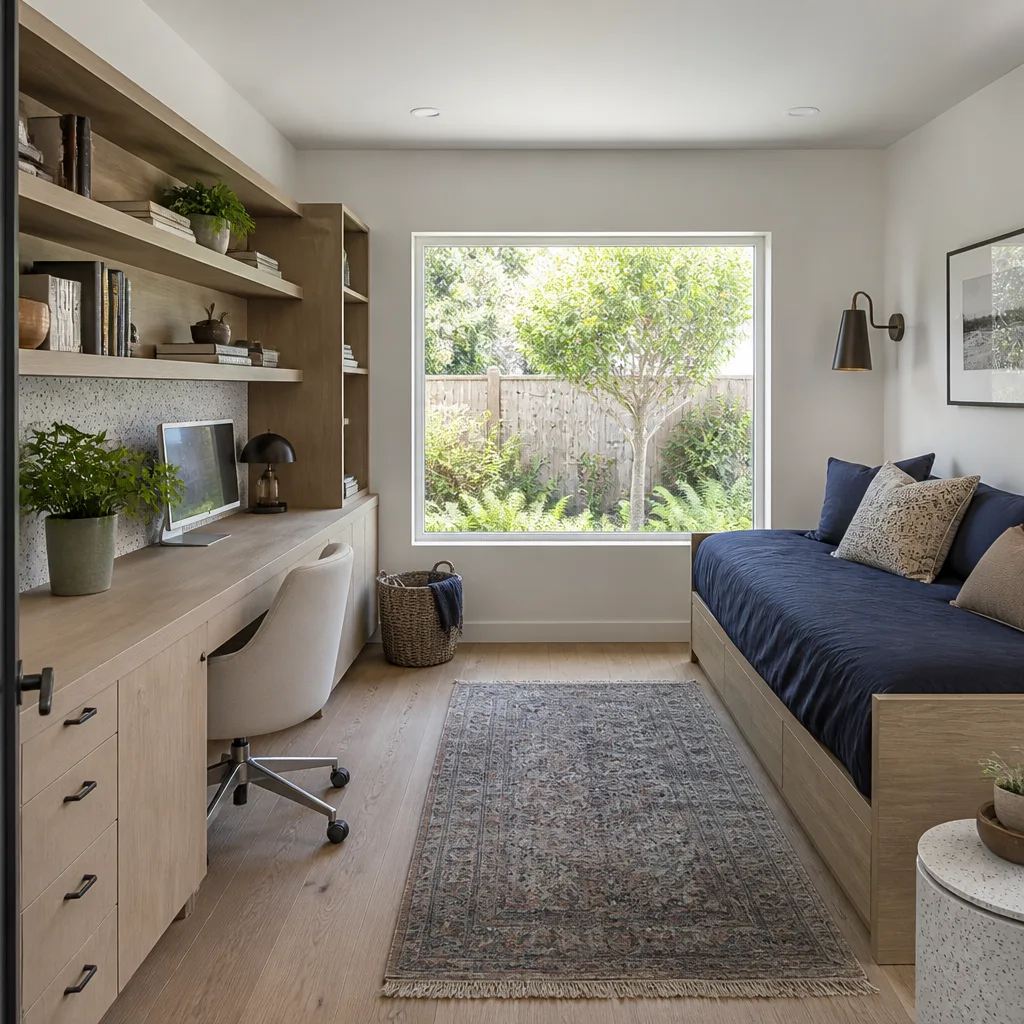
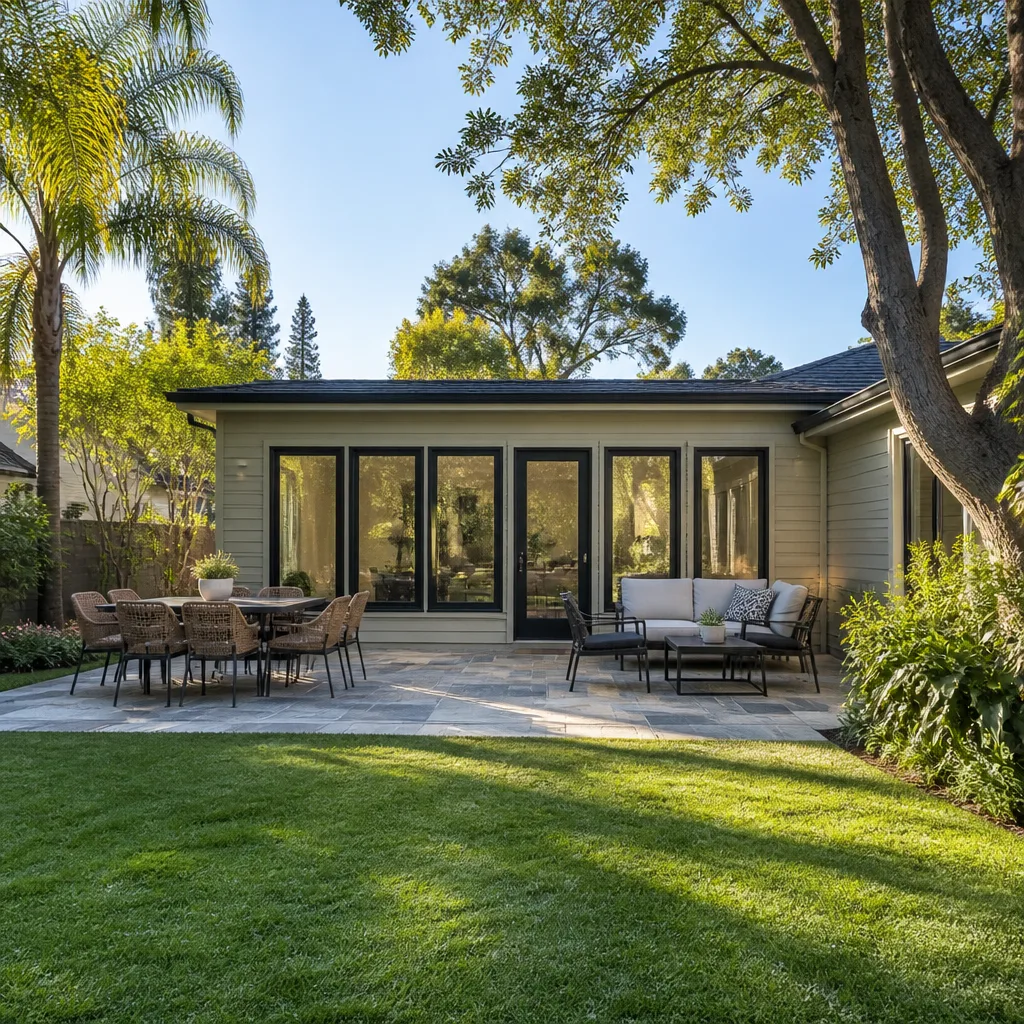
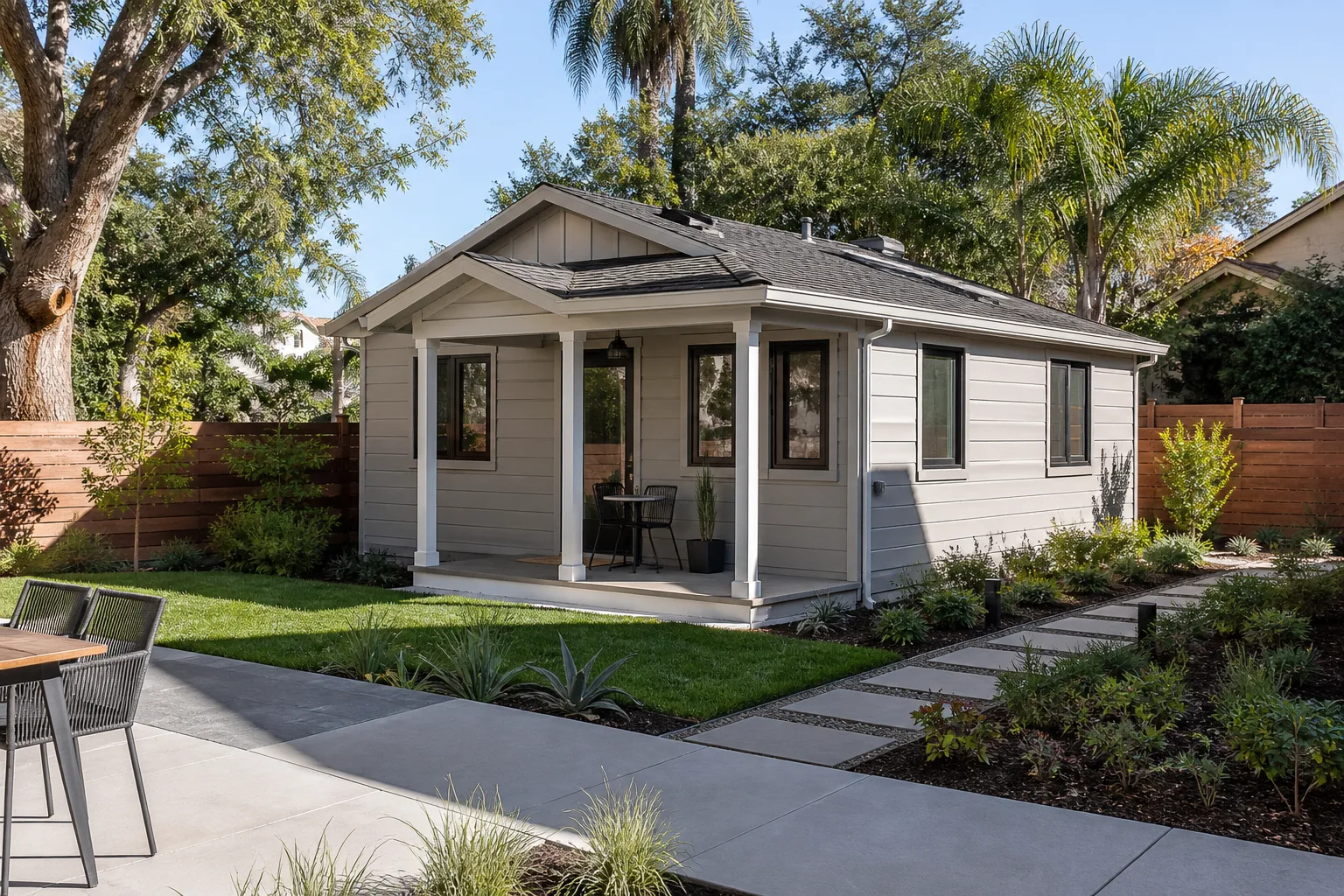
In San Diego, a full James Hardie home addition runs $53,100 to $153,400 depending on scope: a 300-square-foot bump-out with a single bath lands at the lower end, while a 600-square-foot primary suite addition with a walk-in closet and full bath pushes toward the top. A detached ADU with James Hardie siding runs $106,200 to $259,600, reflecting the higher cost of separate foundation, utility runs, and kitchenette or full kitchen installations.
Here’s how the numbers break down for a typical mid-range 400-square-foot Hardie-clad addition in San Diego:
- Site prep, demo, and foundation: $12,000 – $28,000. Pier-and-beam costs less than slab-on-grade, but most San Diego additions tie into an existing slab.
- Framing and roof structure: $15,000 – $35,000. California seismic codes add hardware and engineering that other states skip.
- James Hardie siding and trim (material + install): $8,000 – $18,000 depending on product line and complexity. HardiePanel field areas cost less than full HardiePlank lap coverage, but the difference shrinks as the project size grows.
- Rough electric, plumbing, and HVAC tie-in: $9,000 – $22,000. Fixtures are on top of this.
- Interior finishes, paint, and trim: $8,000 – $25,000. This swings widely based on your cabinet, countertop, and flooring selections.
Every Mason Remodeling Co San Diego bid is a written line-item price delivered before work starts. No verbal ballpark that grows later. Our additions and ADUs carry a written guarantee for 365 days from the completion date, and if a repair or installation fails within that year, we return at no charge. That’s the 365-Day Done Right Promise, and it covers the whole project, not just the siding.
DIY or Call Us?
Siding installation on a new addition is not a weekend project. James Hardie fiber cement is heavy, dust-heavy when cut, and unforgiving of small installation errors. The board will fail prematurely if fasteners are driven too deep, butt joints are caulked incorrectly, or the bottom clearance is off. We’ve re-sided more than one San Diego DIY addition where the owner saved $4,000 on labor and spent $14,000 on tear-off and replacement two years later.
What an owner can do safely: check the bottom edges of your existing siding for soil contact, keep sprinklers off the walls, and note where paint is failing. If you see multiple symptoms from the list above, call us and we’ll tell you whether it’s a repair or a replacement. As Isaac Pruett puts it when homeowners call with a failing addition, “Tell me what’s broken. I’ll tell you what it takes.” Call (619) 673-9302 for a free estimate and a written price before any work begins.
FAQs
James Hardie fiber cement siding carries a 30-year non-prorated limited transferable warranty, and in San Diego’s climate it typically lasts 40 to 50 years with proper installation and repainting every 12 to 15 years. The siding outlasts most of the components attached to it: caulking fails first, then paint, then the boards themselves. Call (619) 673-9302 if your siding is showing early wear and we’ll tell you whether it’s an installation issue.
Yes, in most cases. Individual runs of HardiePlank or sections of HardiePanel can be removed and replaced without touching the framing, and corner trim boards can be swapped in a day. The exceptions are when water has been getting behind the siding long enough to rot the sheathing or framing, which requires opening the wall.
Siding and trim installation on a typical San Diego addition takes three to seven working days depending on the complexity of the elevation, the number of corners and windows, and the product line specified. A simple ADU with four corners and standard windows finishes faster than a bump-out with multiple wall offsets and a Dutch hip roofline.
We order James Hardie products per job to keep the color, texture, and profile matched to your existing home. We do keep HardieTrim and common flashing components on hand because our San Diego crews use them on nearly every addition, and we also carry parts for KraftMaid, Cambria, and Silestone finishes we’ve installed. Call (619) 673-9302 for an exact quote on your project. Estimates are free, and you’ll get a written price before anything is scheduled.
Written by Isaac Pruett, Owner, Mason Remodeling Co San Diego at Mason Remodeling Co San Diego, serving San Diego and nearby areas.


